
Lubbock County Bench Warrants Explained
A bench warrant is court process tied to a missed setting or failure to comply with a court order. In Lubbock County, the court with the case decides whether to issue it and what action can resolve it. A district-court matter goes through a different clerk than a city citation or JP fine-only case.
The exact docket label controls. A bench warrant is distinct from a Chapter 15 arrest warrant based on a sworn complaint, and from capias pro fine used after a fine-only judgment. Ask the clerk to identify the process rather than treating every missed appearance as the same record.
Lubbock County Bench Warrants Cross Courts
A missed appearance can stay with the court that set the case. The six district courts handle district-level matters; County Court and three County Courts at Law handle their own cases; the four JP precincts handle fine-only and traffic matters; city courts handle municipal citations. Lubbock County has no unified bench-warrant search form for these court levels.
For a Lubbock Municipal Court citation, the city says a citation is a promise to appear within 12 days and warns that failure to appear may lead to a warrant, added charges, fines, or penalties. That local notice does not set a universal deadline for every other Lubbock County court.
Lubbock County JP Bench Warrant Contacts
When a missed setting comes from justice court, identify the precinct on the citation before calling. The research lists Precinct 1 at 806-775-1547, Precinct 2 at 806-775-1556, Precinct 3 at 806-775-1328, and Precinct 4 at 806-775-1540.
The source materials contain conflicting judge names for Precinct 3, so confirm the current assignment with the court clerk. Give staff the case number and ask whether the matter is a bench warrant, capias, or another court action.
How Lubbock County Bench Warrants Are Issued
The judge’s process follows the underlying case and missed obligation. Local municipal rules say failure to appear at a scheduled setting may result in a warrant. The court record may show an FTA, a warrant, a capias, or another order at different stages. Staff or police verbal statements do not replace a binding court action.
There is no single Texas public warrant database. A process may be held by the issuing court, with the Sheriff involved in execution or booking. The court controls recall or quash instructions and can tell the person whether a hearing, payment, motion, or direct appearance is required.
Lubbock County FTA Warrants Differ by Court
Local notice terms are not interchangeable. Lubbock Municipal Court describes a 12-day promise to appear. Shallowater’s handout says payment or court notification is due within 12 days, including weekends and holidays. Slaton tells a cited person to contact the court no earlier than two days and no later than the citation date, usually about ten days. Confirm the date printed on the actual document.
Slaton’s official court page also has conflicting posted hours, so a call to the clerk is safer than relying on one schedule. A phone call may obtain instructions, but Slaton’s page says it does not count as an appearance.
Lubbock Municipal Court local rules explain the court’s failure-to-appear language.
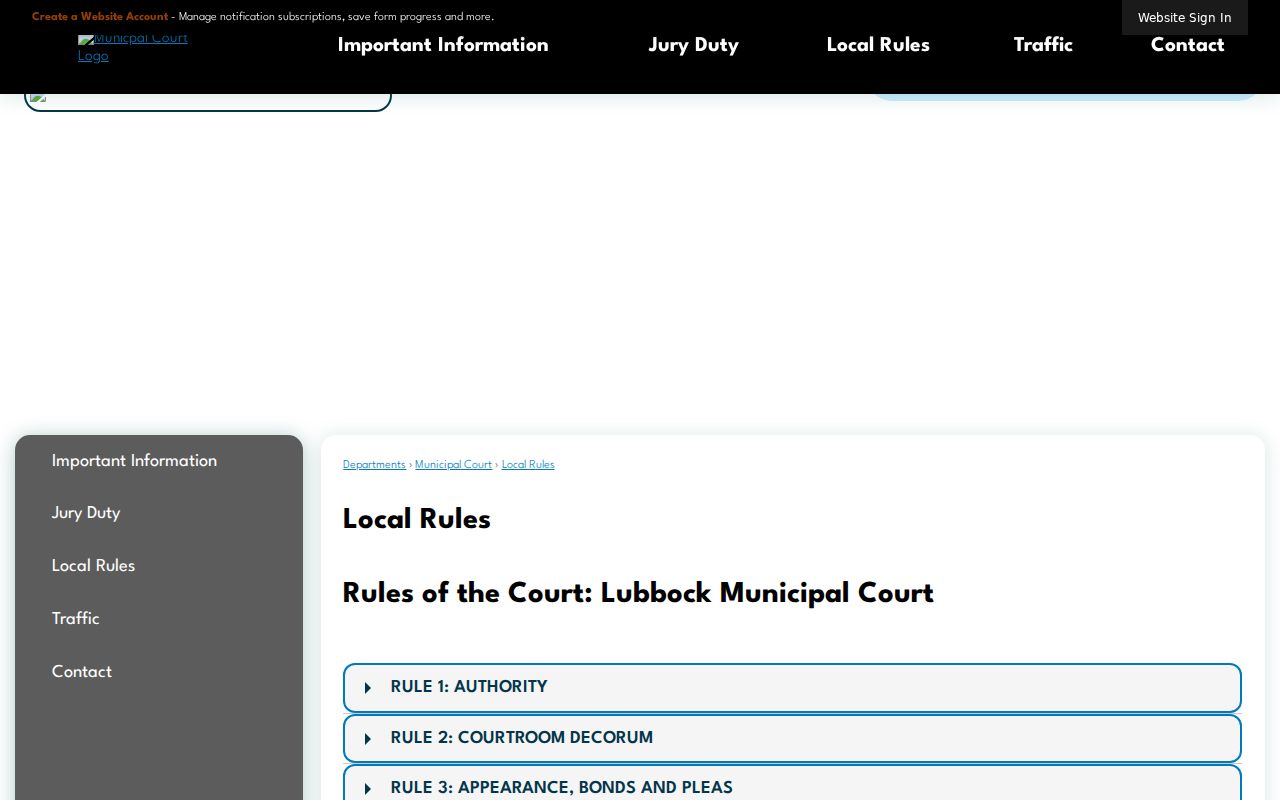
The rule page is a court source, while the county Sheriff’s jail roster remains a custody tool.
Bench Warrants and Arrest Warrants Compared
Both forms can result in arrest, but they start differently. A bench warrant follows court process; an arrest warrant follows a sworn complaint and probable-cause review. The record and court that can answer the question may therefore differ. The companion arrest-warrant information describes that issuance path.
| Feature | Bench Warrant | Arrest Warrant |
|---|---|---|
| Trigger | Missed setting or failure to comply | Sworn complaint and probable cause |
| Who issues | Judge in the existing case | Magistrate under Chapter 15 |
| Primary record | Issuing court docket and clerk | Issuing court and complaint or affidavit |
| Next step | Ask the court about setting, motion, or recall | Ask the court or counsel about process and bond |
Lubbock County Capias Warrant Process
A capias pro fine is post-judgment process for fine collection, not simply another name for every bench warrant. Chapter 45A covers fine-only proceedings, including a hearing and undue-hardship concepts, voluntary appearance, and good-faith compliance. A JP or municipal court must explain which option applies to its case.
- FTA
- A failure to appear when the court required a response or attendance.
- Capias
- Court process for arrest or custody connected to a case or judgment.
- Recall
- A court action withdrawing process; confirm the status with the issuing court.
- Quash
- A court order setting aside process, usually after a request or hearing.
Use the court’s term and ask which remedy is available before paying or appearing.
Resolving a Lubbock County Bench Warrant
Only the issuing court can explain how to recall, quash, or otherwise resolve its process. Lubbock County did not publish a general walk-in surrender protocol, bond-window hours, or a countywide clearing fee. Confirm the right office and whether counsel should arrange the appearance before traveling.
- Ask the Sheriff’s warrants line or the clerk which court issued the process and how it is labeled.
- Ask whether the court requires a motion, hearing, appearance, payment, or bond, and whether an attorney should file or attend.
- Follow the court’s direction for a setting or appearance; no countywide walk-in docket was verified.
- After the court acts, request written confirmation of the order’s status and any remaining case terms.
Caution: Do not assume a missed date or old entry has cleared. Confirm the current status with the issuing court before deciding what to do.
Lubbock County Bench Warrants Need a Clerk
The Sheriff may explain execution or route a call, but the court holds the case order. District-court files go through the District Clerk; county-level matters route through the County Clerk or the particular court; JP and municipal matters stay with their issuing clerks. A request should include the court, cause or citation number, process type, and date range.
The County Clerk’s online records interface is an e-recording and county-record channel, not a warrant search. Use it for its stated record functions, then contact the issuing court for a bench-warrant status.
The County Clerk portal displays its own public record access interface.
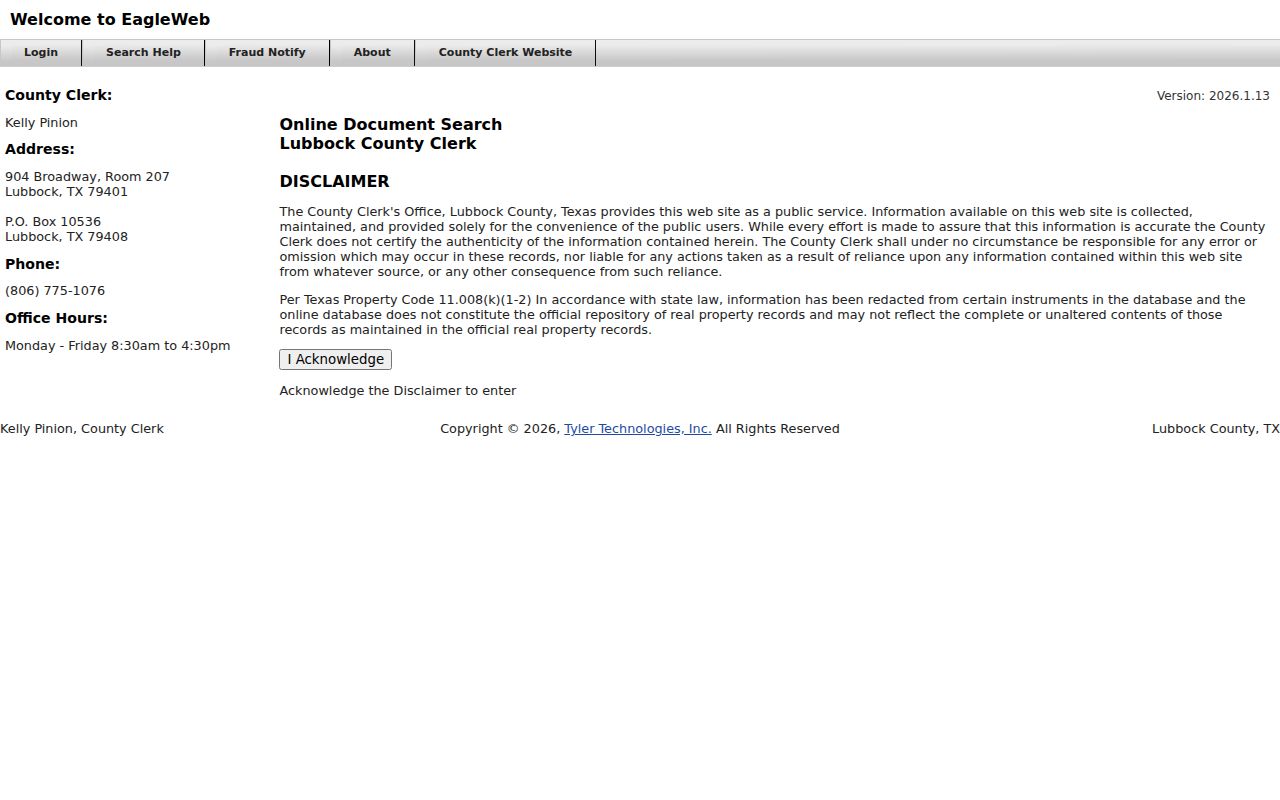
The interface shows the clerk’s access channel, not a countywide warrant list.
Finding the Court That Issued the Warrant
A bench warrant stays with the court that set the underlying case. Lubbock County has six district courts, the County Court and three Courts at Law, four JP precincts, and separate city municipal courts. Use the court name on the notice or ask the Sheriff’s line to help identify the correct clerk.
If the case appears in a city portal, call that city court about current process. For district or county-level cases, use the court directory and clerk route. The court, not a generic jail roster, controls a recall or next setting.