
Checking for a Warrant in Lubbock County
Texas runs no statewide warrant portal. Lubbock County does not either. Each court keeps its own docket, so no single office holds every answer. Start with the issuing court when you know it. Otherwise, call the Lubbock County Sheriff's warrants line and ask for routing. The Sheriff lists that direct line, a separate records route, and an Active Jail Search. That roster answers one question: who is in custody. It does not list every unserved order. A name that does not appear there does not prove that no warrant exists. Have the case or citation number, the court or city, the full name, and the relevant date range ready before you call. District matters go to the District Clerk or the court coordinator, while municipal and JP questions stay with their own courts, and the official answer must come from whichever office handles the record.
- Identify the court or city named on the citation, notice, or case paper. If it is unclear, call the Sheriff’s warrants line at 806-775-1422 and ask which office should confirm the process.
- For a Lubbock city citation, use the official court account search or call the Municipal Court. The jail roster is for custody, not warrant status.
- Contact the District Clerk, County Clerk or court clerk, the correct JP precinct, or the city court that issued the case.
- If a document is needed, send a narrow written request to the likely holder. Give the process type, case or citation number, and date range.
- Ask the issuing court about the next step and how it will confirm recall, payment, or another resolution. Consider speaking with a lawyer before appearing.
Lubbock County Warrant Search Starts Locally
Every warrant question in Lubbock County begins with the right desk. The Sheriff's contact page splits warrants, courts, records, detention, patrol, civil, and non-emergency calls into separate listings. Use the official contact directory to reach the one you need. Posted office hours run Monday through Friday, 8 a.m. to 5 p.m. No walk-in warrant counter or complete printout is promised, so call first. Ask whether the Sheriff can confirm the order or whether the issuing clerk must answer. For a current booking question, the Sheriff's Active Jail Search explanation uses inmate name, booking number, and SO number as its inputs. Those fields find custody information. They do not turn the roster into a warrant database. A booking entry may not explain every court action. The county's public jail roster interface is one more custody channel. Read it for that purpose only, then confirm any order with the Lubbock County court that issued it.
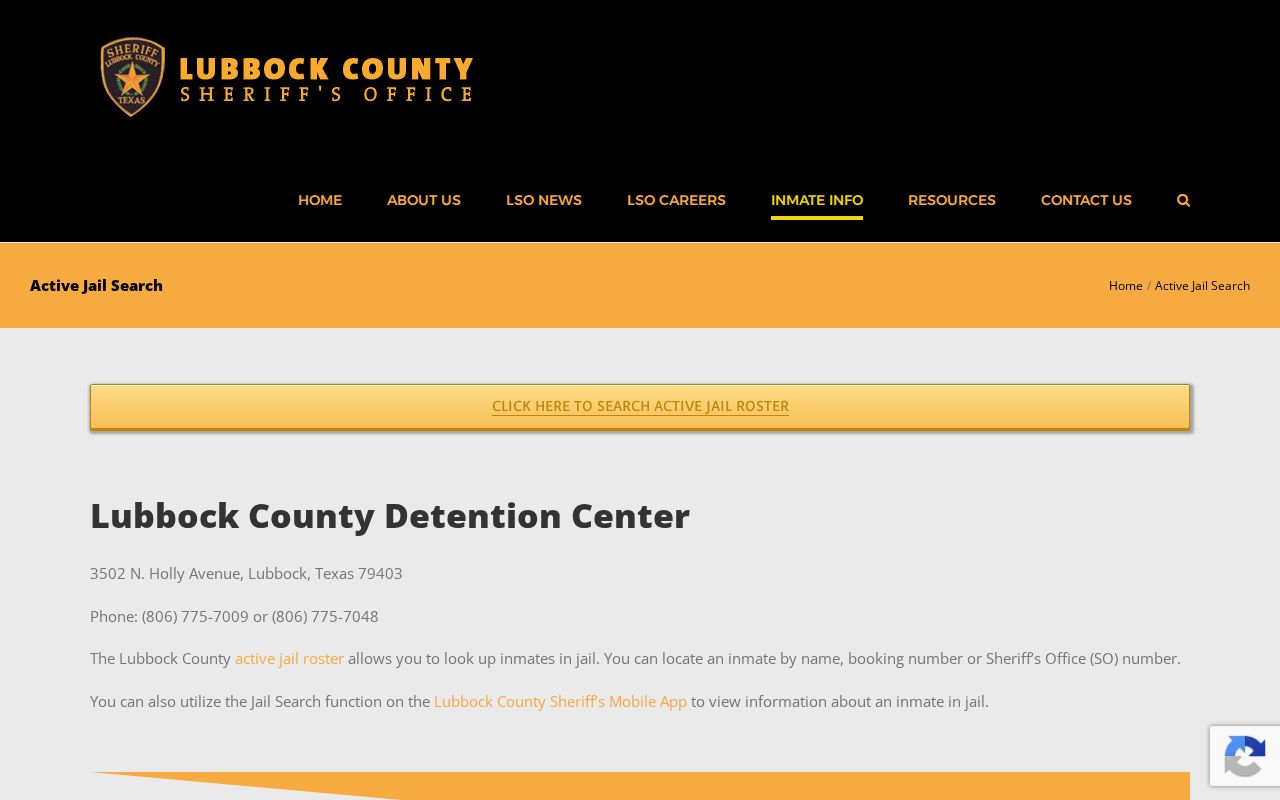
The official page keeps a booking search separate from a warrant inquiry. The Sheriff's direct warrants line still routes local questions. Lubbock County's public information page points to the courthouse when the issuing court is known.
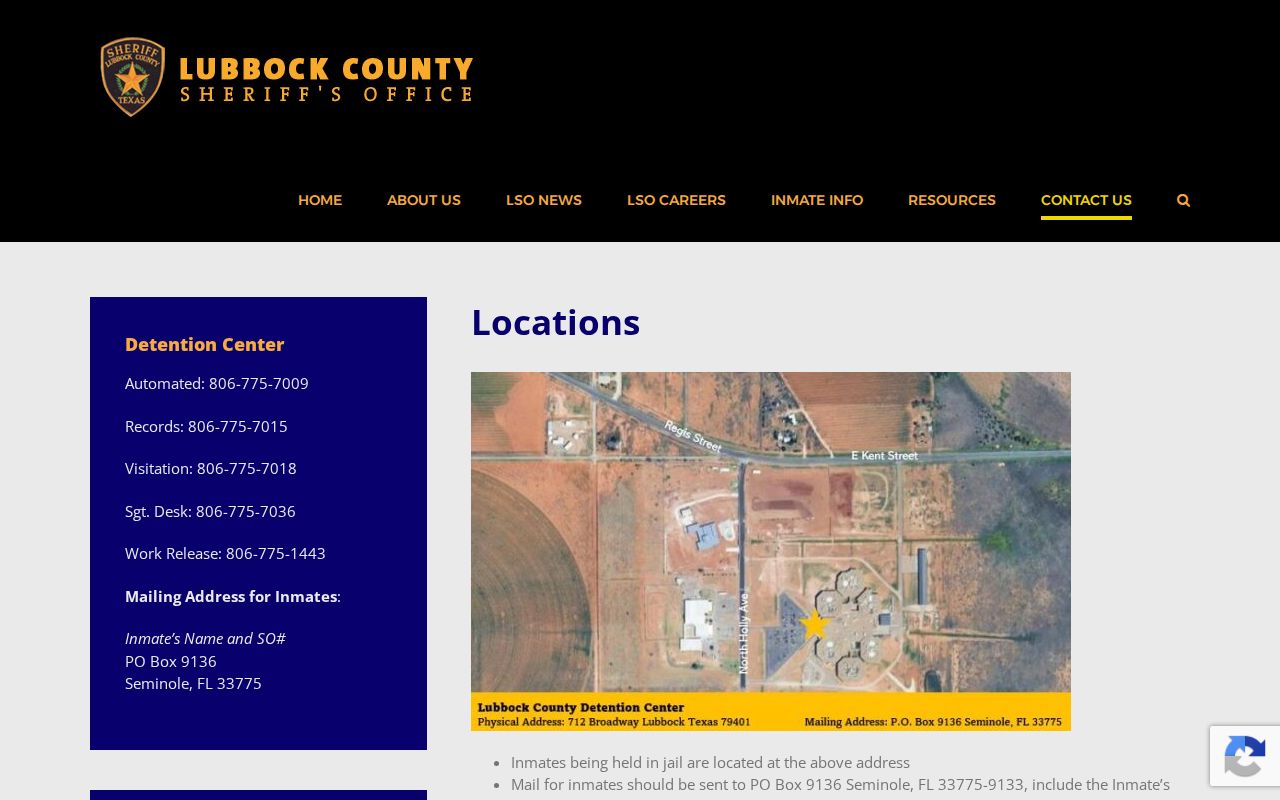
Lubbock County's Sheriff contact page lists separate units. That separation keeps a court-status question from being mistaken for a detention or incident-record request.
Lubbock County Warrant Types
The label matters. In Lubbock County, it controls where you ask and what may clear the warrant. A magistrate may issue an arrest warrant after a sworn complaint and probable-cause review. A bench warrant or capias can follow a missed court obligation. A capias pro fine collects a post-judgment fine. Meanwhile, an FTA/FTP report to DPS is a separate license-renewal consequence.
| Warrant Type | How It Arises | Who Issues It |
|---|---|---|
| Arrest warrant | Sworn complaint and probable-cause process | Magistrate in the issuing court |
| Bench warrant | Missed setting or failure to comply | Judge of the court with the case |
| Capias | Court process tied to a case or judgment | Issuing district, county, JP, or city court |
| Capias pro fine | Post-judgment fine collection | Municipal or JP court, under Chapter 45A |
Lubbock County Warrant Terms Stay Separate
A citation is a notice, not a warrant. It carries a promise to appear, and the court acts only if that promise is broken. After a missed response, a court may record an FTA and then issue a warrant or capias under its own process. A fine-only judgment may bring capias pro fine steps. Lubbock County splits this work across courts. The District Court, County Court at Law, JP precinct, and municipal court each keep their own jurisdiction. No single result screen stands in for all of them. Chapter 45A covers hearings, hardship, voluntary appearance, and other steps for fine-only matters. Ask the issuing court to name the process, and do not treat FTA, capias, and warrant as matching labels.
Inside a Lubbock County Warrant Record
Ask the clerk, not a sample record. A case number comes from the court itself. Lubbock County has no common countywide warrant-number pattern. If a portal shows a citation balance or a custody status, read it as just that. Neither field is a current warrant status, and relabeling it can mislead you.
| Warrant / case number | Court-assigned number identifies the file; format varies by court. |
|---|---|
| Process type | Arrest warrant, bench warrant, capias, capias pro fine, summons, or FTA/FTP report. |
| Issuing court | The district, county, JP, or municipal court that controls the order. |
| Dates | Issue, service, recall, or status dates may come from separate records. |
| Bond / next setting | Ask whether an amount is set and what court appearance is required. |
| Status | Use the court’s own term and confirm it directly; status labels can differ. |
Lubbock County Warrant Counts Need Context
Lubbock County budget tables count work, not people. One budget table reports Sheriff Active Warrants totals of 15,199 for FY20, 36,340 for FY21, and 13,661 for FY22. A later document labels 11,038 for FY23, 13,709 for FY24, and 7,500 as a projected FY25 estimate of warrants in the system. The tables disagree. One series even differs between 12,661 and 13,661 for the same historical figure. These are workload measures. Their labels change by source. They cannot show a person's current status or explain why a total moved from one year to the next. Read the county budget statistics with the year and table wording attached, and treat no figure as a live list of Lubbock County warrants.
Issuing and Serving Warrants in Lubbock County
In Lubbock County, courts issue warrants and peace officers carry them out. The District Clerk, Sara Smith, holds the district-court criminal files. Kelly Pinion, the County Clerk, keeps county-level records and recording functions. Justice Courts in Precincts 1 through 4, plus each city's municipal court, keep case files of their own. Deputies and other authorized officers can serve process. Even so, the Sheriff is not automatically the clerk for the issuing court.
Lubbock County Sheriff’s Office
712 Broadway
Lubbock, TX 79401
Warrants: 806-775-1422
Lubbock County Warrants Cross Six District Courts
Felony cases in Lubbock County sit in six judicial district courts: the 72nd, 99th, 137th, 140th, 237th, and 364th. The county also runs a constitutional County Court, County Courts at Law Nos. 1, 2, and 3, and four JP precincts. A paper that names only Lubbock County may not tell you which clerk or coordinator can answer a process question. Pull the court name and cause number from your notice. The Texas District Clerk directory and the county's contact map can help route a district case. Confirm the judge or coordinator with the court itself. Precinct 3 has carried conflicting judge names. Call the clerk listed on your paperwork first.
Warrant Options in Lubbock County
Start with the issuing court in Lubbock County and confirm the exact process type on its record. Ask what it expects: a hearing, a motion to recall or quash, bond, payment, or a direct appearance. For a serious arrest warrant, a lawyer can help you weigh the safest way to appear. Lubbock County publishes no general walk-in surrender protocol, no bond-window hours, and no countywide warrant-clearing fee. So do not assume a trip to the jail or the Sheriff's Office resolves the case.
Important: Ask the issuing court how to appear and whether counsel should arrange it. The county does not promise arrest-free walk-in treatment.
Lubbock County Warrant Resolution Options
After a custodial arrest in Lubbock County, the Fair Defense plan describes Article 15.17 magistration. Misdemeanor arrests are presented within 24 hours and felony arrests within 48 hours, and a magistrate may set bond when no amount is already fixed. That is procedure, not a promised release time or an automatic recall of the warrant. Ask the issuing court whether your matter can go straight to a judge or must follow the jail route. For a fine-only capias pro fine, the municipal or JP court can explain the hearing, ability-to-pay or hardship process, and voluntary appearance. Chapter 45A supplies the state framework, but the court itself gives the current terms. A posted payment, on its own, may not confirm the warrant is recalled.
Lubbock County Warrant Records and Public Access
The Texas Public Information Act gives you a written route to government records in Lubbock County, with some exceptions. The Sheriff's LSO-1064 form has no warrant checkbox, but its "Other" field can carry a narrow request: court, case or citation number, process type, and date range. Ask the Sheriff whether it holds the item, or whether the court clerk is the proper office. The form permits a written estimate before costs exceed $40. The county publishes no set warrant-search or certified-copy fee, so ask before you rely on one.
Key Rules:
Texas Government Code Chapter 552 sets the public-information request framework and allows legal exceptions.
Code of Criminal Procedure Chapter 15 covers warrant and complaint requirements.
Family Code §58.010 restricts access to juvenile warrant materials.
Federal Warrants Need Separate Records
A Lubbock County or city search does not reach federal process. Federal case records route through the Northern District of Texas, and sealed warrants or pre-indictment material may not appear on a public docket. The Mahon Federal Building at 1205 Texas Avenue serves the Lubbock Division, a separate system from the county courthouse on Broadway.
The federal division page gives court access information; PACER is a docket service, not a county warrant list. Its pricing notice scheduled a change for January 2027, so confirm current fees before using it.
The Northern District page identifies the Lubbock courthouse and court contacts.
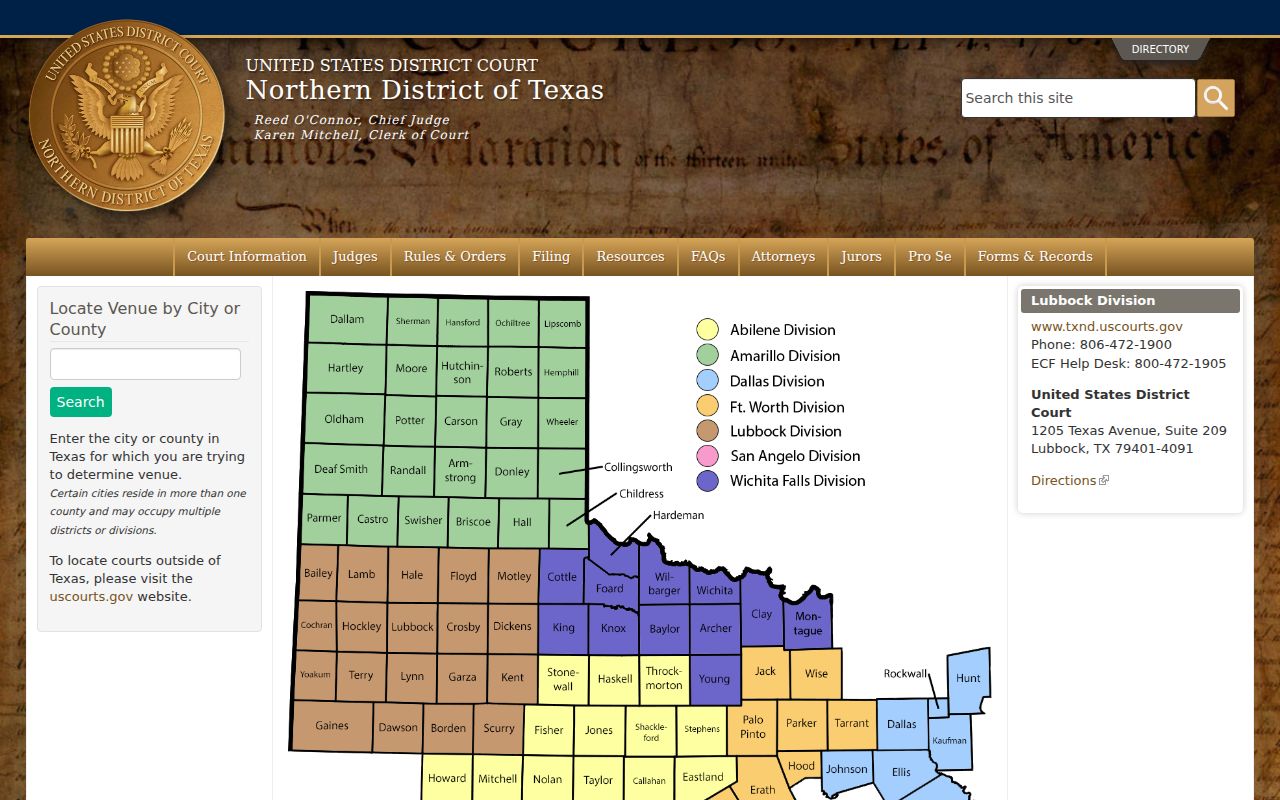
The federal building stands apart from the Lubbock County Sheriff and the municipal courts, so its records must be requested on their own terms.
For an explanation of docket fees, read the official PACER pricing page.
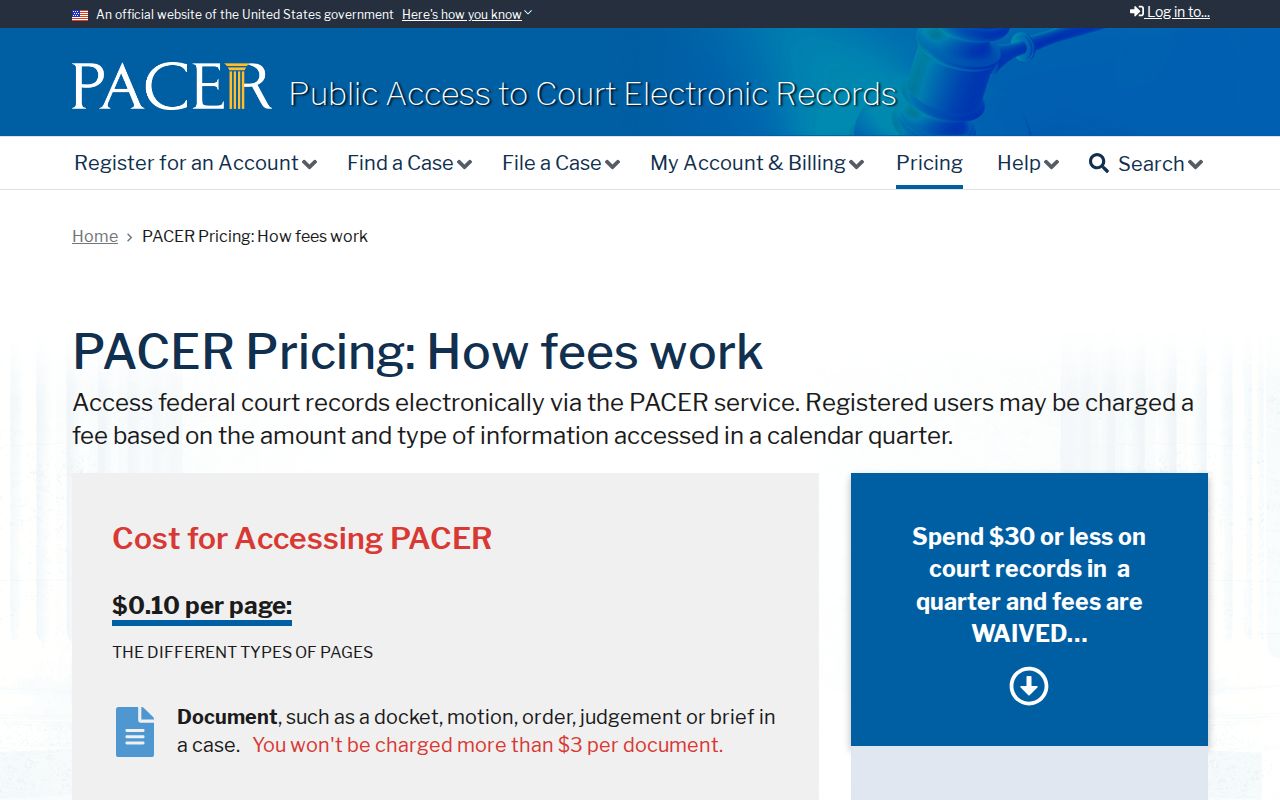
A docket result is not proof that every federal warrant has been filed publicly.
Lubbock County Warrant Context From Census
The Census incorporated-place table lists 2020 population figures for five Lubbock County cities: Lubbock, Slaton, Wolfforth, Shallowater, and Idalou. Those numbers describe the communities each municipal court serves. They say nothing about warrant volume or court workload, and they cannot tell you whether a citation or warrant is open in any one case.
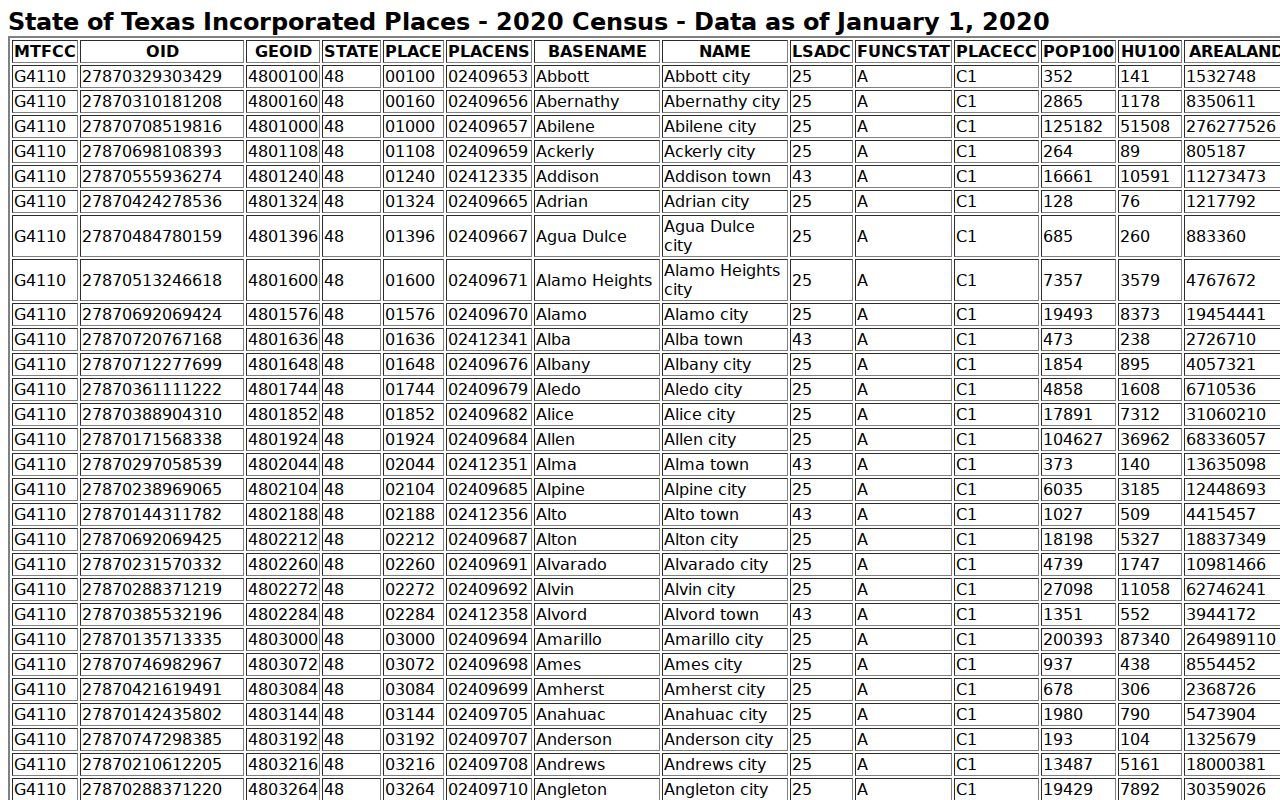
A population table is civic context, never a substitute for a citation search in Lubbock County.
Start with the municipal court named on the citation and verify the record with its clerk.
Lubbock County Warrants by City
City courts keep their own citation and failure-to-appear process. These five incorporated places rank by their 2020 Census figures in the Lubbock County profile, though the numbers do not predict warrant volume. Lubbock is the county seat. Slaton, Wolfforth, Shallowater, and Idalou each run separate municipal-court channels. Use the city named on the citation before you try any county-level system.
Lubbock Warrant Search
257,141 (2020) · City citation portal and Municipal Court.
Slaton Warrant Search
5,858 (2020) · Court clerk, mail appearance, and linked payment portal.
Wolfforth Warrant Search
5,521 (2020) · City citation portal and Municipal Court contact.
Shallowater Warrant Search
2,964 (2020) · Direct court contact and Wednesday session.
Idalou Warrant Search
2,193 (2020) · Municipal Court safe harbor for limited Class C matters.